
Introduction
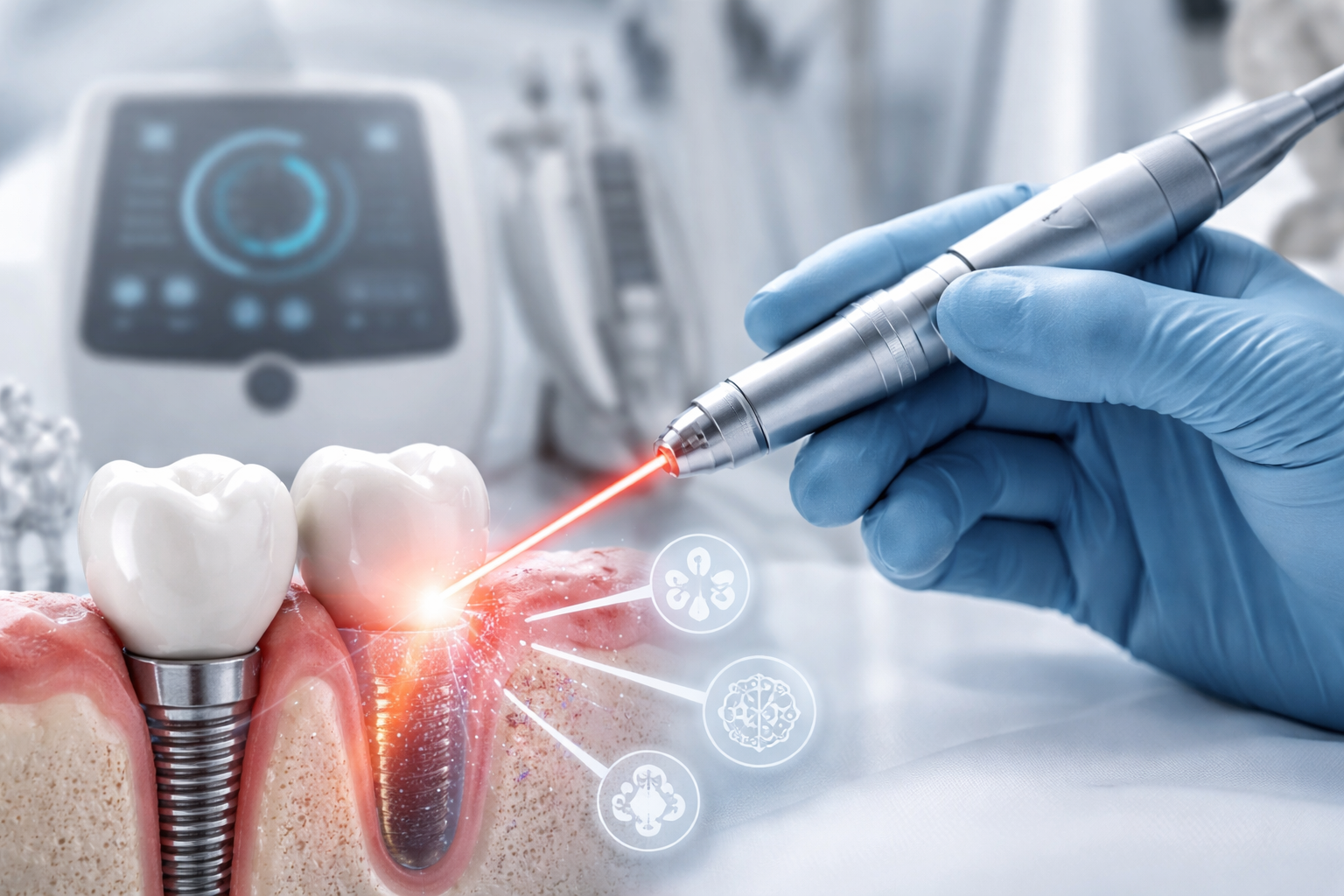
Laser technology is rapidly transforming the field of periodontics and implantology, marking a significant shift from traditional invasive procedures to precision-driven, minimally invasive treatments. With continuous advancements, lasers are now being widely integrated into everyday dental practice. From crown lengthening and non-surgical periodontal therapy to second-stage implant procedures, laser applications are enabling clinicians to deliver treatments with greater accuracy, efficiency, and patient comfort.
Enhanced Healing and Reduced Discomfort
One of the most notable advantages of laser dentistry is its ability to promote faster healing while significantly reducing pain and discomfort. Traditional methods often involve cutting, suturing, and longer recovery periods. In contrast, laser-assisted procedures are gentler on tissues and less traumatic. Techniques such as Photobiomodulation (PBM) play a crucial role in stimulating cellular activity, accelerating tissue repair, and enhancing regeneration. Similarly, Photodynamic Therapy (PDT) is highly effective in controlling infections by targeting and eliminating harmful microorganisms. PBM can stimulate osteoblasts and recruit them to contribute significantly to BONE-IMPLANT Interface strength which is most critical for successful osseointegration. Together, these technologies improve clinical outcomes while minimizing implant failures whilst making the entire workflow absolutely blood-less and painless.
Precision and Tissue Preservation
Laser technology offers exceptional precision, especially in soft tissue management. Clinicians can target specific treatment areas with high accuracy, ensuring minimal impact on surrounding healthy tissues. This level of control leads to reduced bleeding, less postoperative swelling, and a lower risk of infection. Such benefits are particularly valuable in periodontal treatments, where preserving healthy tissue is essential for long-term success and stability.
Minimally Invasive and maximally impactful PDT options.
Another significant advantage of lasers is their ability to support minimally invasive and non-surgical treatment approaches such as photodynamic therapy. PDT is being increasingly used as an effective alternative for managing periodontal disease without the need for incisions or sutures. This not only simplifies procedures but also reduces patient anxiety. With shorter recovery times and less discomfort, patients can resume their daily activities much sooner compared to conventional methods. Advanced therapies such as 810 nm activation of Chitosan enriched Indocyanine green PDT can event prevent and treat PERI-IMPLANTITIS problems.
Improved Patient Experience and Growing Acceptance
Beyond clinical benefits, laser technology is greatly enhancing the overall patient experience. Painless procedures, quicker healing, and improved treatment outcomes contribute to higher levels of patient satisfaction. As awareness about these benefits continues to grow, more patients are actively choosing laser-based treatments. This increasing acceptance reflects a broader shift toward advanced, comfortable, and efficient dental care solutions, where both clinical excellence and patient well-being are prioritized.
Expanding Role in Modern Dental Practice
In addition to clinical effectiveness, lasers are becoming an essential part of modern dental workflows. They support better time efficiency, reduce chair side complexity, and allow clinicians to perform multiple procedures using a single technology platform. As more professionals adopt laser systems, there is a growing emphasis on skill development and protocol standardization. This continuous integration highlights how laser technology is not only improving treatment outcomes but also reshaping the overall approach to periodontal and implant care.